
Essential Heavy-Duty Engine Mistakes You Can’t Afford to Make

When your truck is your livelihood, engine mistakes are something you can’t afford to make. One overlooked warning sign or skipped service can snowball into catastrophic downtime. Understanding where drivers and fleet managers commonly slip up helps you avoid costly repairs and extend the life of your investment.
Below, we break down the most critical heavy-duty engine mistakes, why they happen, and how you can stay ahead of them.
Ignoring Early Warning Signs of Engine Trouble
Your diesel engine rarely fails without warning. Hard starts, excessive smoke, knocking sounds, or sudden drops in fuel economy often point to underlying issues within your diesel engine components.
The combustion process—intake, compression, power, and exhaust—depends on precise timing and balanced pressure. When something falls out of sync, performance suffers.
What to Watch For
- Rough idling or misfires
- Blue, black, or white exhaust smoke
- Sudden power loss under load
- Abnormal engine vibration
Brush these off, and you risk piston damage, injector failure, or worse. Address them early, and you’ll likely avoid a full engine rebuild.
Skipping Preventive Maintenance
Preventive maintenance should be on everyone’s checklist, and proactive inspections and fluid checks prevent small issues from escalating into major failures. Yet many operators stretch service intervals to “save money,” only to end up costing themselves more in the long run.
Commonly Skipped Services
- Regular diesel engine maintenance inspections
- Oil and filter changes
- Coolant flushes
- Air filter replacements
- Valve adjustments
Clean oil lubricates critical components, such as crankshaft bearings and camshafts. Degraded oil loses viscosity, increases friction, and accelerates wear. Before long, you’re facing premature bearing failure or turbo damage.
Stay consistent. A well-documented maintenance schedule protects your engine and your bottom line.
Neglecting the Cooling System
Your cooling system transfers radiant heat away from the engine using coolant, a radiator, and a water pump. When that system falters, overheating can warp cylinder heads, crack blocks, and destroy head gaskets.
Costly Cooling Mistakes
- Running low on coolant
- Ignoring coolant contamination
- Failing to replace worn fan clutches
- Driving with a plugged radiator
Chicago summers can push temperatures high, while winter freeze-thaw cycles stress coolant systems further. Monitor coolant levels regularly and test for proper antifreeze ratios. Overheating is a matter of when, if you ignore this system.
Overlooking Oil Pressure Problems
Heavy-duty diesel engines rely on pressurized oil systems to protect high-load components. When oil pressure drops, metal meets metal. And that’s when things go south fast.
Warning Signs of Oil Pressure Issues
- Dashboard oil pressure warning light
- Ticking or knocking sounds
- Burning oil smell
- Rising engine temperature
Low oil levels, failing oil pumps, or clogged passages can all contribute. Continue operating under low pressure, and you may face catastrophic failure within minutes.
Regular oil analysis can detect contamination or breakdown early. It’s a simple step that prevents massive damage.
Mismanaging the Fuel System
Your fuel system must deliver atomized diesel into the combustion chamber at precise intervals. When injectors clog or fuel pumps weaken, combustion efficiency drops.
That inefficiency leads to:
- Reduced power
- Poor throttle response
- Excessive exhaust smoke
- Increased fuel consumption
Contaminated diesel is a major culprit in urban environments. Water or debris in your fuel can corrode injectors and damage high-pressure systems.
Using quality fuel, replacing filters regularly, and scheduling periodic fuel system diagnostics can prevent injector replacement—a repair no operator enjoys paying for.
Ignoring After-Treatment System Maintenance
Modern heavy-duty engines rely on advanced emissions systems like Diesel Particulate Filters (DPF), Selective Catalytic Reduction (SCR systems), and Diesel Exhaust Fluid (DEF) injection to reduce harmful emissions.
When these systems malfunction, your truck may enter derate mode, limiting speed and power.
Common After-Treatment Mistakes
- Ignoring DPF regeneration warnings
- Using low-quality DEF
- Postponing forced regens
- Tampering with emissions components
A clogged DPF increases back pressure and strains your engine. Neglecting regeneration cycles eventually leads to costly replacement and hefty fines from the EPA. Emission systems aren’t just for keeping you on the right side of regulations; they also directly impact engine performance.
Overworking the Engine
Hauling loads beyond GVWR, aggressive acceleration, and prolonged idling all add stress. Excessive load increases combustion temperatures and cylinder pressure, accelerating wear across pistons, rods, and bearings.
Chicago traffic encourages long idle times. Unfortunately, idling reduces oil pressure efficiency and promotes carbon buildup.
Instead:
- Avoid unnecessary idling
- Monitor load distribution
- Shift properly under load
- Use engine brake systems correctly
Smart operation extends lifespan more than you might think.
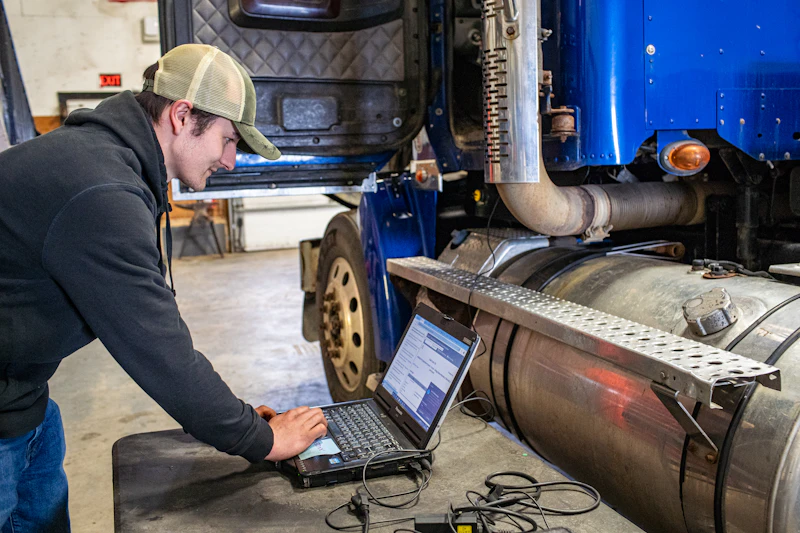
Delaying Professional Diagnostics
Modern heavy-duty trucks rely on Engine Control Modules (ECMs) to monitor performance. When something triggers a fault code, the data you shouldn’t ignore. Delaying diagnostics can turn a minor sensor issue into a full system failure. A simple code scan may reveal:
- Faulty injectors
- Turbocharger inefficiencies
- Emissions irregularities
- Sensor malfunctions
Quick action prevents cascading damage.
Using Low-Quality Parts
Cutting corners on replacement parts rarely pays off. Cheap filters, off-brand sensors, and low-grade lubricants compromise reliability.
Your engine operates under extreme compression and heat. Subpar components fail faster and may even void warranties.
Stick with manufacturer-recommended specifications for:
- Filters
- Gaskets
- Injectors
- Fluids
Quality parts protect performance and resale value.
Final Thoughts: Protecting Your Heavy-Duty Engine Investment
Avoiding these heavy-duty engine mistakes isn’t complicated, but it requires discipline. Stay proactive with preventive maintenance for diesel trucks, monitor warning signs, protect your cooling and lubrication systems, and never ignore emissions components. Small habits today prevent massive repair bills tomorrow.
And remember, if you’re ever in doubt, schedule a professional diesel engine service with a trusted heavy-duty repair shop.
Similar posts
%20(1).webp)
7 Ways to Prevent Cummins Engine Problems in Chicago, IL
Keep your Cummins engine running strong with seven practical maintenance strategies designed for Chicago fleets. Learn how to prevent costly breakdowns, improve reliability, and reduce downtime while operating on busy freight corridors throughout the greater Chicago area.
SCR System Failures: Why Your Fleet Trucks May Lose Power
Fleet trucks' power loss can result from issues such as SCR system failures, affecting scheduling, route completion, driver productivity, fuel efficiency, and customer commitments. SCR uses DEF to reduce nitrogen oxides; failures can trigger warnings.